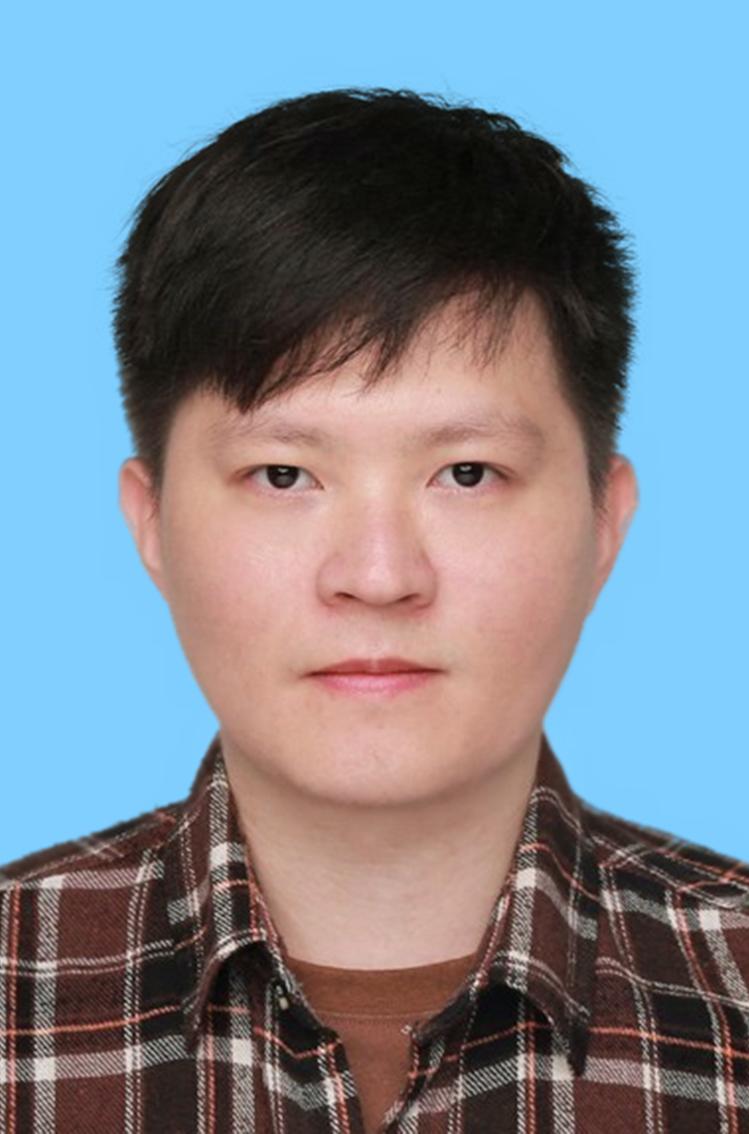
个人简介
杨梓铎,男,博士,暨南大学信息科学技术学院电子工程系讲师,2024年6月于中山大学智能工程学院获得电子信息博士学位。长期致力于人工智能驱动的科学研究(AI for Science),研究领域涵盖AI医学图像分析,AI医学信号处理,AI药物设计,AI材料设计。以第一作者身份在《Nature Communications》(Nature子刊,影响因子16.6009)、《IEEE Transactions on Pattern Analysis and Machine Intelligence》(人工智能领域顶级期刊,影响因子23.6004)等国际知名期刊上发表多篇学术论文,并受邀担任包括《Nature Biomedical Engineering》《Nature Communications》《IEEE TPAMI》《IEEE TNNLS》《Chemical Science》和《IEEE JBHI》在内的多家权威期刊的审稿人。 欢迎对人工智能交叉感兴趣的同学加入课题组: ①学术学位:081002信号与信息处理 ②专业学位:085401新一代电子信息技术(含量子技术等)(专业学位)、085403集成电路工程(专业学位)
研究方向
AI for Science,AI医学图像分析,AI医学信号处理,AI药物设计,AI材料设计
主要论文
Yang Z, Zhao Y M, Wang X, et al. Equivariant Atomic and Lattice Modeling Using Geometric Deep Learning for Crystal Structure Optimization[C]//Proceedings of the AAAI Conference on Artificial Intelligence. 2026, 40(33): 27747-27755.(CCF A类会议) Lu Y, Liu J, Bai J, Rong J, Qi J, Yang Z*. et al. Multi-Scale, Multi-Basis Wavelet Voting Network for Automatic Analysis of Fetal Heart Rate Signals[J]. IEEE Journal of Biomedical and Health Informatics, 2025.(新锐期刊分区表一区top) Yang Z, Zhao Y M, Wang X, et al. Scalable crystal structure relaxation using an iteration-free deep generative model with uncertainty quantification [J]. Nature Communications, 2024, 15(1): 8148.(综合顶刊,中科院一区top,影响因子16.6009,入选Editors' Highlights) Yang Z, Zhong W, Lv Q, et al. Interaction-Based Inductive Bias in Graph Neural Networks: Enhancing Protein-Ligand Binding Affinity Predictions From 3D Structures[J]. IEEE Transactions on Pattern Analysis and Machine Intelligence, 2024, DOI: 10.1109/TPAMI.2024.3400515. (人工智能旗舰期刊,中科院一区top,影响因子23.6004) Yang Z, Wang X, Li Y, et al. Efficient equivariant model for machine learning interatomic potentials[J]. npj Computational Materials, 2025, 11(1): 49.(中科院一区top,AI4M顶刊,影响因子11.9, 入选featured article ) Yang Z, Liu X, Zhang X, et al. Modeling crystal defects using defect informed neural networks[J]. npj Computational Materials, 2025, 11(1): 229. (中科院一区top,AI4M顶刊,影响因子11.9,与物理学诺奖得主Kostya S. Novoselov团队合作) Zhong W, Yang Z, Chen C Y C. Retrosynthesis prediction using an end-to-end graph generative architecture for molecular graph editing[J]. Nature Communications, 2023, 14(1): 3009. (共同第一作者,综合顶刊,中科院一区top,影响因子16.6009) Yang Z, Zhong W, Zhao L, et al. MGraphDTA: deep multiscale graph neural network for explainable drug-target binding affinity prediction[J]. Chemical Science, 2022, 13(3): 816-833. (AI for Science顶刊, 中科院一区top,影响因子8.4001,ESI高被引用论文) Yang Z, Zhong W, Lv Q, et al. Learning size-adaptive molecular substructures for explainable drug-drug interaction prediction by substructure-aware graph neural network[J]. Chemical Science, 2022, 13(29): 8693-8703. (AI for Science顶刊, 中科院一区top, 影响因子8.4001) Yang Z, Zhao L, Wu S, et al. Lung lesion localization of COVID-19 from chest CT image: A novel weakly supervised learning method[J]. IEEE Journal of Biomedical and Health Informatics, 2021, 25(6): 1864-1872.(生物医学工程顶刊,中科院二区top) Yang Z, Zhong W, Lv Q, et al. Geometric interaction graph neural network for predicting protein-ligand binding affinities from 3D structures (GIGN)[J]. The Journal of Physical Chemistry Letters, 2023, 14: 2020-2033. (中科院二区top,ESI高被引用论文) Yang Z, Zhong W, Zhao L, et al. ML-DTI: mutual learning mechanism for interpretable drug–target interaction prediction[J]. The Journal of Physical Chemistry Letters, 2021, 12(17): 4247-4261. (中科院二区top) Yang Z, Zhong W, Lv Q, et al. Multitask deep learning with dynamic task balancing for quantum mechanical properties prediction[J]. Physical Chemistry Chemical Physics, 2022, 24(9): 5383-5393. (中科院三区)
承担课题
国家自然科学基金青年科学基金项目(在研),主持 广东省自然科学基金面上项目(在研),主持 中央高校基本科研业务费专项资金项目(在研),主持
讲授课程
本科生课程: 《人工智能》(大三下学期) 《高级程序语言设计》(大二上学期)
|